
General
270GW Surge Exposes India’s Urban Heat Crisis
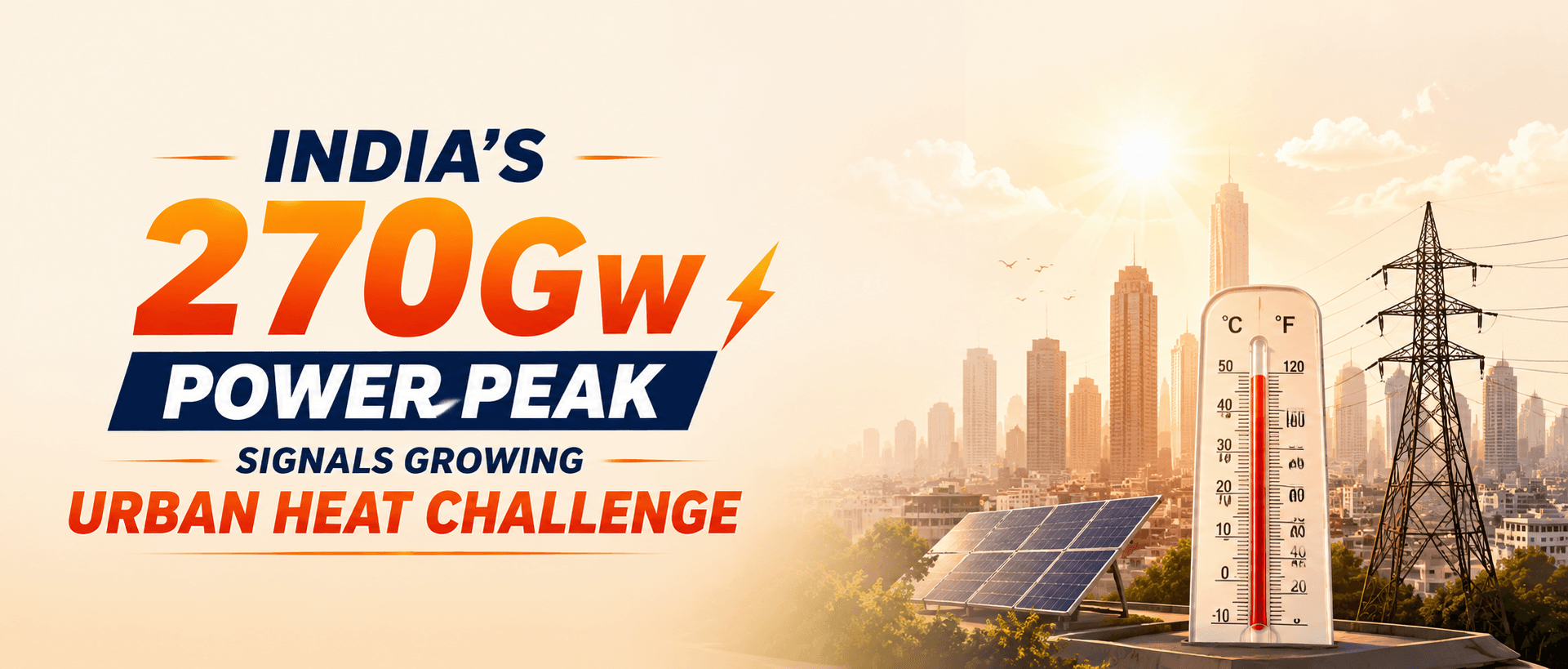
India has recorded its highest-ever peak electricity demand of 270 GW, highlighting how rising temperatures and rapid urbanisation are reshaping the country’s energy landscape. Experts believe the growing Urban Heat Island (UHI) effect is becoming one of the biggest hidden drivers behind the surge in power consumption.
Cities across India are increasingly turning into massive heat-retaining zones as concrete expansion, shrinking green cover, traffic congestion, and dense infrastructure trap heat for longer durations. This phenomenon is sharply increasing dependence on cooling systems, especially air-conditioners, causing electricity demand to rise at an unprecedented pace.
What makes the trend more significant is that residential cooling demand is now growing faster than industrial electricity consumption. Non-industrial states such as Uttar Pradesh are witnessing power demand levels surpassing several manufacturing-heavy regions, reflecting how household energy use is transforming the country’s power dynamics.
Studies show that the intensity of the Urban Heat Island effect in Indian cities ranges between 2°C and 10°C, with northwestern regions experiencing the most severe temperature spikes. The rapid rise in air-conditioner usage is further worsening the situation, as waste heat emissions from cooling appliances add even more heat to already overheated urban environments.
With air-conditioner penetration expected to reach nearly 40% of Indian households by 2030, experts warn that India’s energy infrastructure could face mounting pressure unless cities adopt sustainable cooling and climate-resilient planning strategies.
The situation is accelerating demand for solutions such as cool roofs, rooftop solar systems, energy-efficient buildings, urban forests, and green infrastructure, which are increasingly being viewed as essential tools to reduce heat stress and manage electricity demand.
The record power peak has also intensified focus on India’s renewable energy transition. As urban populations continue to grow and cities contribute a larger share to the economy, policymakers and industry leaders are expected to prioritise smarter energy systems capable of supporting future demand while reducing climate impact.
India’s latest power milestone is not just a reflection of economic activity — it is also a clear signal that the country’s cities are entering a new era where urban heat and energy security are becoming deeply interconnected challenges.
This article was editorially rewritten by PSU Darpan. Original source: Indian PSU
Share this article
Discussion
Join the discussion
Sign in to like, comment, and reply to others