
Appointments
SAIL Workforce Cut Sparks PSU Governance Debate
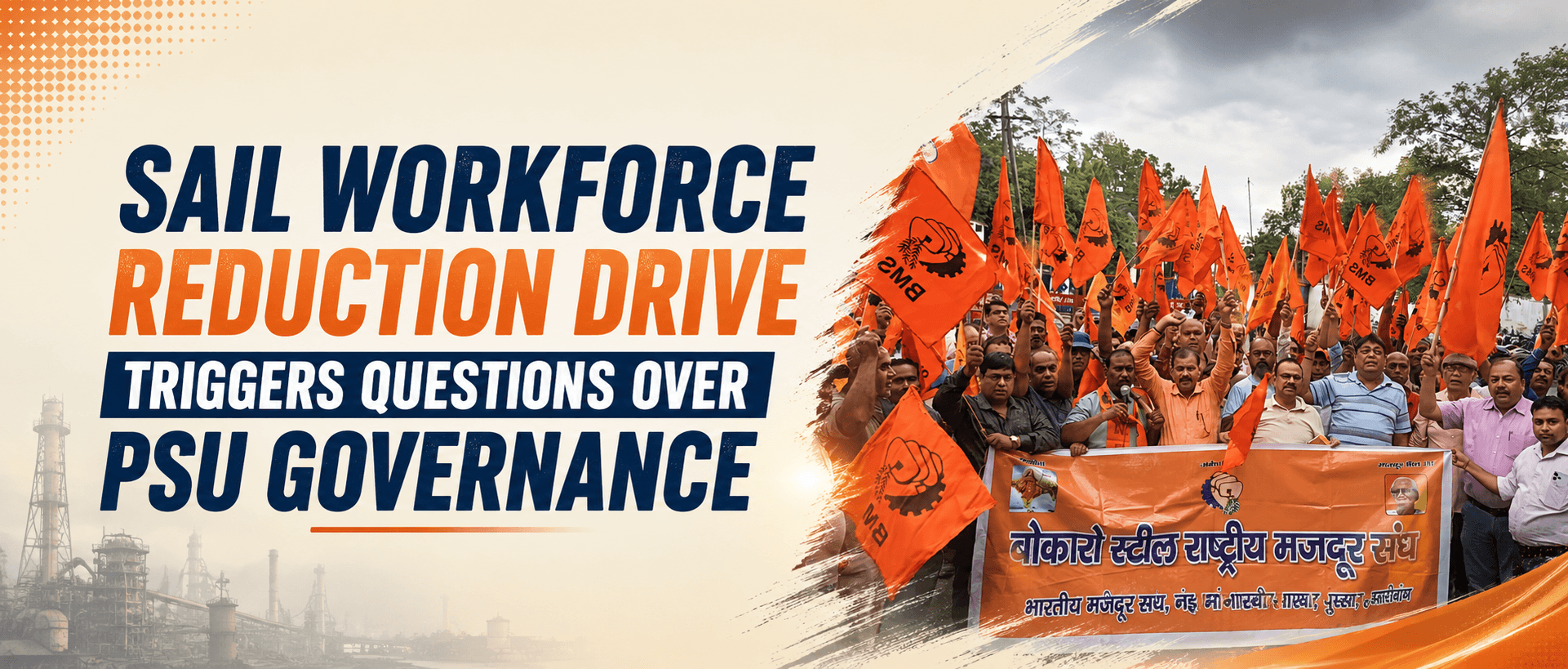
A major debate is unfolding inside Steel Authority of India Limited as trade unions and employees raise strong concerns over what they describe as an aggressive workforce reduction exercise within the Maharatna steel PSU.
What initially appeared to be an internal administrative issue has now evolved into a much larger discussion surrounding public sector governance, labour policy, bureaucratic influence, and the future of India’s state-owned enterprises.
Workers and union representatives are openly questioning who is driving the manpower reduction strategy and whether the exercise is genuinely aimed at operational efficiency or being used as a tool to project administrative “reform credentials.”
According to employee groups, the scale and pace of workforce rationalisation have created growing anxiety across units, especially as the process is allegedly moving forward without sufficient dialogue or consultation with labour unions.
Union leaders argue that if manpower reduction is truly a broader public sector reform policy, then similar measures should be implemented uniformly across major PSUs. They point out that several government-owned enterprises continue recruitment drives and maintain operational staffing levels while engaging with unions before taking sensitive labour-related decisions.
In contrast, employees claim SAIL’s current approach appears more unilateral, raising concerns over employee morale, plant operations, workload distribution, and industrial safety standards in critical production areas.
The controversy has also brought attention to the larger reform narrative surrounding public sector enterprises under the government’s modernisation and efficiency agenda. While supporters of workforce optimisation view it as a step toward leaner operations and financial discipline, critics argue that PSUs cannot be run purely through balance-sheet calculations without considering institutional experience, technical expertise, and workforce stability.
Industry observers say the developments are being closely watched across the public sector ecosystem, as the outcome could influence future labour and restructuring policies in other state-owned enterprises.
As one of India’s largest steel producers with decades of public investment and industrial legacy, SAIL now finds itself at the centre of a sensitive national conversation - one that goes beyond staffing numbers and touches upon the very model of governance, accountability, and human resource management within India’s strategic public sector institutions.
This article was editorially rewritten by PSU Darpan. Original source: Indian PSU
Share this article
Discussion
Join the discussion
Sign in to like, comment, and reply to others